

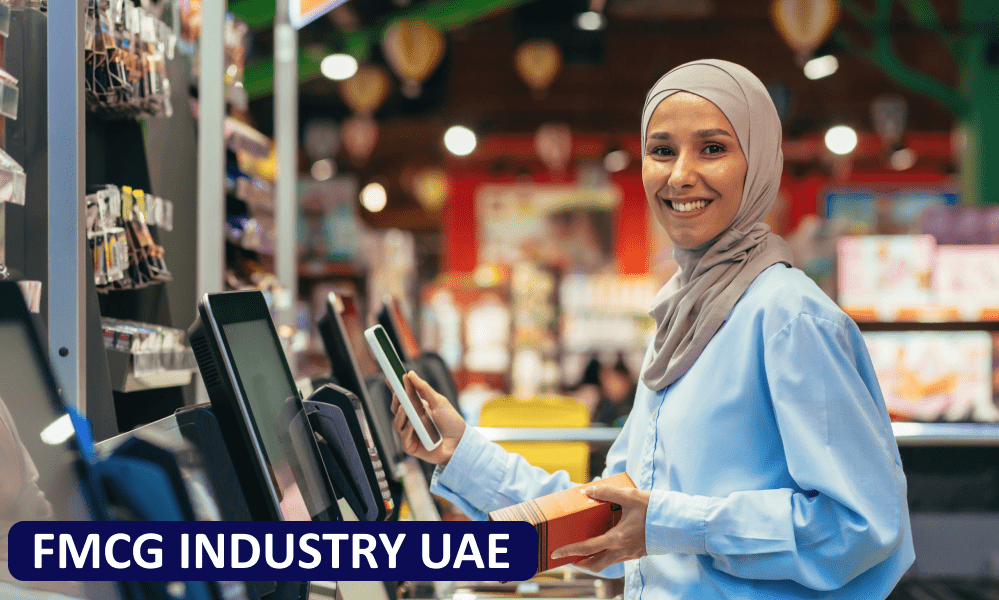
FMCG has become one of the most sought-after employer sectors among mid-career commercial professionals in the UAE. The reasons are structural. FMCG employers, particularly the large multinationals operating across UAE, Saudi Arabia, and the wider GCC, offer transferable skills development that candidates recognise as a career accelerator: exposure to retail negotiation, supply chain complexity, brand management, and P&L responsibility at a scale and pace that most other sectors do not. MOHRE (Ministry of Human Resources and Emiratisation) Emiratisation data shows FMCG as one of the stronger-performing sectors for UAE national employment in private sector commercial roles, partly because the development programmes that major FMCG companies run are structured enough to meet Nafis (the federal Emiratisation programme for private sector nationals) onboarding requirements without additional configuration. For specialist FMCG recruitment UAE, RFS HR Consultancy places professionals across Dubai, Abu Dhabi, and the wider GCC.
The FMCG employer-of-choice dynamic in UAE is not simply about salary. It is about the combination of learning velocity, brand association, and career optionality that an FMCG commercial role provides. A candidate who has managed a category at a major FMCG multinational for three to four years can move laterally into retail, e-commerce, or FMCG-adjacent sectors and carry genuine credibility. That optionality is priced into why strong candidates accept FMCG roles even when comparable financial services or technology roles offer higher base compensation.
Why FMCG Attracts UAE’s Best Commercial Talent: 5 Structural Advantages
- Revenue ownership at scale, Key Account Managers and National Sales Managers in FMCG manage retailer relationships and distribution agreements that represent AED 50 million to AED 500 million in annual revenue. That commercial scale is rare in most other sectors at comparable seniority levels.
- Cross-functional exposure, FMCG commercial roles require regular interaction with supply chain, finance, marketing, and regulatory teams. That breadth of exposure accelerates leadership development in a way that narrower functional roles do not.
- Brand equity as career currency, Working for a Unilever, Nestlé, P&G, Henkel, or PepsiCo operation in UAE is recognised by regional and global hiring managers as a quality signal. The brand equity of an FMCG employer transfers to the candidate’s career trajectory in a way that carries weight across sectors.
- Clear progression frameworks, Mature FMCG organisations have defined career ladders from KAM to NSM to Commercial Director that candidates can understand and plan against. That transparency is attractive to candidates who are making 5 to 10 year career bets.
- GCC mobility, FMCG careers in UAE frequently involve regional remits covering Saudi Arabia, Kuwait, and the wider Gulf. That geographic scope is a career differentiator for candidates who want to build GCC-wide commercial experience.
What UAE FMCG Employers Offer: Benchmarking the Employment Package
| Package Component | Multinational FMCG | Regional FMCG / Distributor |
|---|---|---|
| Base salary | Market-competitive to premium | At or slightly below market |
| Housing allowance | AED 4,000 – 12,000 per month | AED 2,000 – 6,000 per month |
| Annual air ticket | Yes, typically for family | Yes, typically individual |
| Annual bonus | 10 – 30% of base (performance-linked) | 5 – 15% (variable) |
| Medical insurance | Full family coverage | Individual, sometimes family |
| Car or car allowance | Common for NSM and above | Car allowance or scheme |
| Training and development | Structured programmes, regional exposure | Ad hoc, limited budget |
| Emiratisation support | Nafis-integrated, structured | Compliance-driven, less structured |
Emiratisation in FMCG: Why UAE Nationals Choose FMCG Commercial Careers
Something slightly off the main argument but worth naming: the Nafis programme has made FMCG more attractive to UAE national candidates specifically because the development structure that major FMCG companies offer aligns naturally with what Nafis requires. A structured 12 to 24 month commercial development programme, rotating through customer management, supply chain, and brand management, satisfies both the employer’s Emiratisation reporting requirement and the Emirati candidate’s career development expectation. That alignment is not accidental; it reflects how well-run FMCG employers have integrated Emiratisation planning into their commercial talent strategy rather than treating it as a compliance overhead.
The FMCG roles most commonly filled by UAE nationals through Nafis are at the analyst and coordinator level entering into Key Account Management pathways, supply chain planning and demand planning roles, and trade marketing assistant positions with a clear brand management progression track. Organisations that build visible progression frameworks, showing Emirati candidates where a KAM role leads in three years, consistently attract stronger Nafis pipeline candidates than those who offer a generic commercial role with undefined advancement.
Employer Brand Strategy for FMCG Companies Competing for UAE Talent
In a competitive FMCG talent market, employer brand operates as a candidate-facing multiplier on every vacancy. I have seen this play out concretely on searches: two FMCG employers with similar salary packages and similar role scope will get very different candidate response rates if one has a visible employer brand story and the other does not. The most effective employer brand signals in FMCG for UAE talent are: verified case studies of career progression from within (where did our last three NSMs come from?), visible UAE and GCC market investment (are you expanding or consolidating?), DEI commitments with substance (Emiratisation track record, female representation in leadership), and an honest account of what makes the culture distinct from a generic multinational environment.
- Lead with career outcomes, not job descriptions, Candidates evaluate FMCG roles based on where the role leads, not just what it requires today. Show the progression path explicitly in your recruitment communications.
- Publish Emiratisation commitments, UAE national candidates respond positively to visible Nafis partnerships and development programme commitments. Publishing these commitments signals that you treat Emiratisation as a talent investment, not a compliance cost.
- Use alumni networks as advocates, Former FMCG employees who left on good terms and progressed in their careers are the most credible employer brand ambassadors. Their LinkedIn profiles and professional endorsements carry weight with active candidates.
- Differentiate on learning investment, Structured training programmes, regional exposure trips, and access to global FMCG best practice networks are differentiators that premium candidates evaluate alongside salary.
Actually, I want to revisit the claim that FMCG brand equity transfers cleanly across all sectors. For most mid-level candidates, yes. But for candidates moving into fintech or enterprise technology at senior level, FMCG experience is evaluated more skeptically. My view, and this will get pushback from FMCG devotees, is that sector optionality is real but not unlimited, and candidates who plan to cross into technology leadership should develop adjacent technical competencies during their FMCG years.
Frequently Asked Questions: FMCG as an Employer in UAE
Why do experienced professionals choose FMCG over higher-paying sectors in UAE?
The decision to take an FMCG role over a higher-base alternative in financial services or technology comes down to career optionality, skill development velocity, and the quality of the professional network that FMCG builds. A commercial leader with five years of FMCG experience can move into general management, private equity operations roles, retail leadership, or e-commerce strategy with genuine credibility. The breadth of exposure that FMCG commercial roles provide, managing P&Ls, negotiating with major retailers, leading cross-functional teams, is genuinely rare and genuinely portable. Candidates who understand this choose FMCG deliberately, not as a compromise.
How does Emiratisation work in FMCG companies in UAE?
FMCG companies with 50 or more UAE-based employees are required to meet MOHRE Emiratisation targets under Cabinet Resolution No. 18 of 2022. Nafis (the federal Emiratisation programme for private sector nationals) provides wage subsidies and social insurance contributions for Emirati hires in eligible commercial roles. The most effective FMCG employers integrate Nafis planning into their annual commercial headcount forecasting, identify specific roles with clear Emirati development pathways, and partner with UAE universities to build a pre-hire pipeline. FMCG is generally considered one of the more Emiratisation-compatible private sectors because the role structure and progression frameworks align naturally with what Nafis requires.
What is the salary range for mid-level FMCG commercial roles in UAE?
At mid-level (3 to 7 years of experience), FMCG commercial salaries in UAE typically range from AED 18,000 to AED 38,000 per month in base compensation, with the upper end of that range applying to Key Account Manager and Category Manager roles in multinational FMCG companies with full package structures (housing, air ticket, bonus, medical). Regional FMCG distributors and smaller FMCG businesses offer 15 to 25 percent lower base compensation with simpler package structures. Senior roles (National Sales Manager, Trade Marketing Director) range from AED 35,000 to AED 65,000 base.
Further Reading: FMCG Careers and UAE Commercial Recruitment
For a complete view of FMCG recruitment in UAE including hiring challenges, agency selection, and the full role market, read our guide on FMCG recruitment in UAE and GCC. For guidance on how UAE employers can attract the best commercial talent through diversified hiring processes, see our post on how to diversify your UAE hiring process. To speak with our FMCG recruitment team directly, visit our FMCG industry recruitment page or explore our recruitment services in Dubai.
Explore related RFS HR Consultancy resources: our executive search firm Dubai UAE for C-suite and director-level placements, Emiratisation recruitment agency UAE for MoHRE quota compliance, UAE salary guide 2025 for compensation benchmarks across all industries, UAE labour law for employers 2025 for Federal Decree-Law No. 33 of 2021 compliance, and recruitment process outsourcing services UAE for high-volume hiring solutions.